Generative UI
Bidlo uses generative UI to help public construction teams overcome UI limits by generating personalized dashboards and features on demand.
Matt Wolfe
Co-founder, Bidlo
Generative UI dynamically builds customized user interfaces to meet unique user needs beyond traditional design systems. Bidlo leverages generative UI to enable public construction professionals to generate personalized dashboards and workflows that enhance bidding intelligence, overcoming the limitations of rigid design.
0:00 Introduction to Generative UI
1:10 Google’s Project Genie and the Future of Generative UI
2:30 Bidlo’s Opinionated Design System
4:00 Limitations of Traditional UI and Role of Generative UI
5:20 Balancing Flexibility and Structure
7:10 Generative UI’s Impact on Public Construction Workflows
8:30 Conclusion and Future Outlook
Hi, I'm Matt, an engineer at Bidlow, and today we're discussing generative UI. You may not have heard of this term, but you've likely encountered it through chatbots like Google’s or ChatGPT. Generative UI refers to a user interface that is dynamically generated to suit your specific request. Google is a leader in this space, particularly with chatbots. They highlighted this in a recent keynote, emphasizing generative UI as central to their product strategy. The concept is that instead of delivering a pre-made UI or pointing you to a website, the system generates a UI on the spot to better answer your question. This approach provides a more tailored experience than a generic text response.
Google’s Project Genie exemplifies this idea. Genie 3 is an experimental video game that generates content as you play. You can provide an image, and the game allows you to navigate its environment, which is created dynamically. This represents a pinnacle of generative UI—a seemingly infinite game world generated in real time. At Bidlow, generative UI is very important. There’s considerable industry focus on quickly generating user interfaces precisely when users need them. Engineers across platforms are investing heavily in solving this problem. Why is this challenging? At Bidlow, we use an opinionated design system.
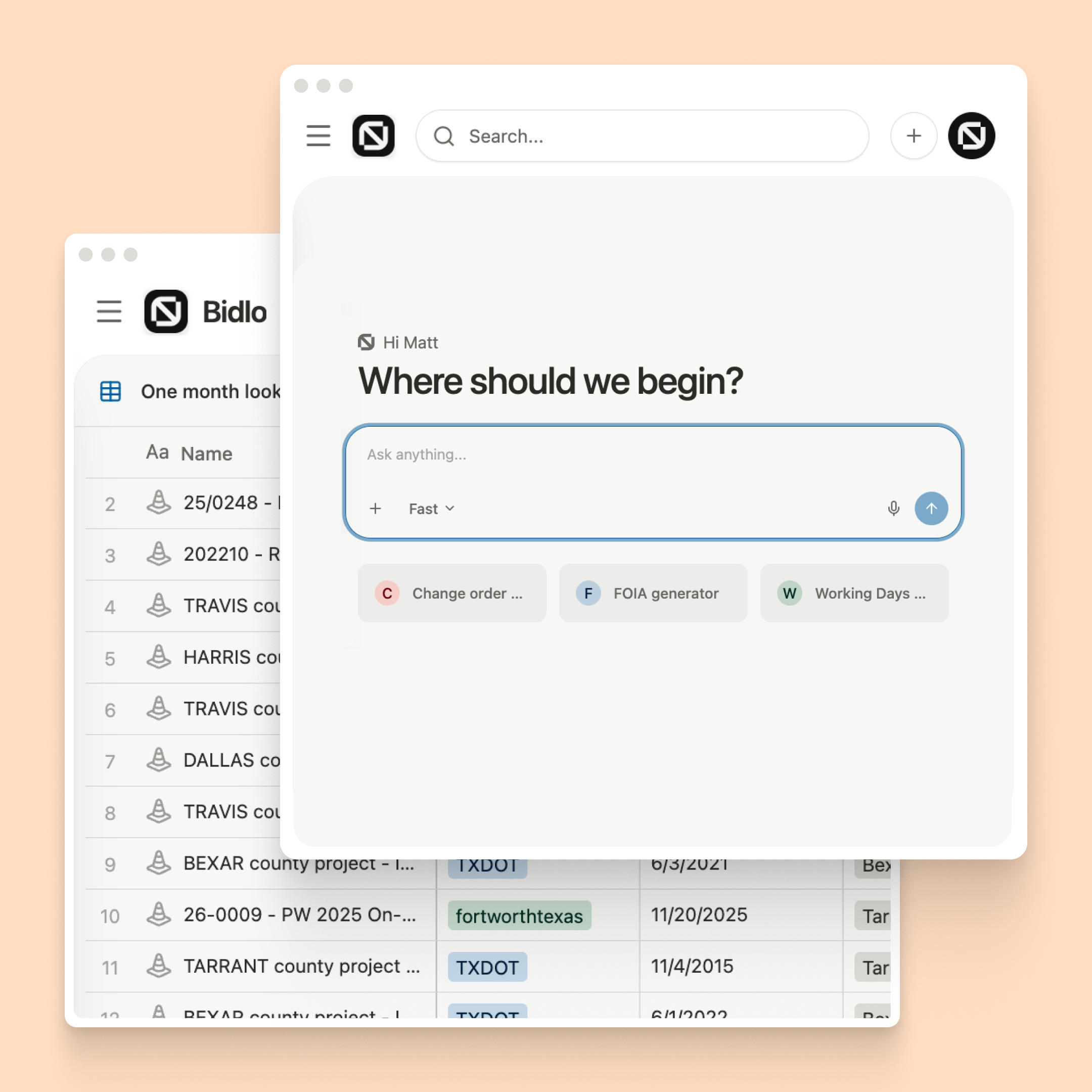
For example, when creating a new private page, you can select templates like a three-month lookahead table showing procurement opportunities in your area. Users can customize this by adding columns such as districts or adjust filtering and sorting. This level of customization covers about 80% of user requests. However, the remaining 20% are requests our system can't accommodate. Users often export data to Excel to perform those custom tasks. Generative UI addresses this gap by enabling users to generate the specific app features they want using the platform’s existing data, such as adding action buttons, color coding, or custom dashboards with charts and activity tracking.
This frees users from being confined to our design system. Why not rely entirely on generative UI? Because while generative UI overcomes the rigidity of static design systems, it introduces a challenge of too much flexibility. Presenting users with a blank slate and unlimited options can be overwhelming—they may not know where to start or what to generate. Our approach at Bidlow finds a middle ground. We offer opinionated templates and predefined rules so users can quickly build what they need. Then, when users encounter limits, it becomes clear what to generate next. Generative UI solves the problem where the system hits a wall, letting users build functionalities previously unavailable.
In summary, generative AI helps overcome the inherent limitations of user interfaces by enabling on-demand feature creation. However, it requires guidance to prevent user overwhelm. At Bidlow, we combine structured templates with generative UI to provide flexibility without losing direction. We'll be integrating more generative UI capabilities in the coming months. This overview explains our approach and why generative UI is gaining so much attention in the industry.